


.jpg?v=1771414528570)
![[fill]](http://www.jaqueslondon.co.uk/cdn/shop/files/96130-_1_05f13adb-488e-4d1d-80a0-dc302447e013.png?v=1760961295&width=500)


![Toy makeup set with various items including a mirror, lipstick, and hairbrush on a white background. [fill]](http://www.jaqueslondon.co.uk/cdn/shop/files/90610-Shopify-Let_sPretendMakeUpSet.png?v=1776673318&width=500)


![Wooden fire engine with firemen. [fill]](http://www.jaqueslondon.co.uk/cdn/shop/files/89835Let_sPlayFireTruckShopifyListing.png?v=1764580525&width=500)

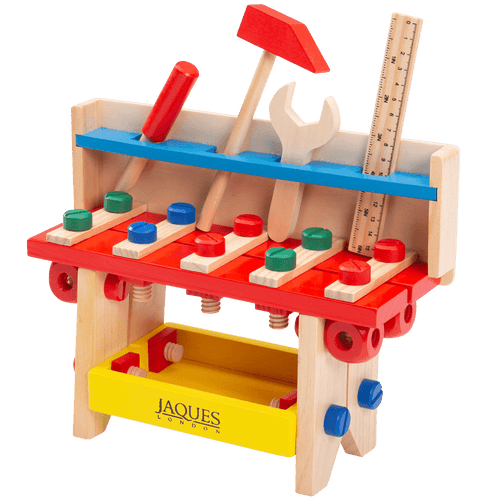
.jpg?v=1726065337258)


.jpg?v=1771345301261)


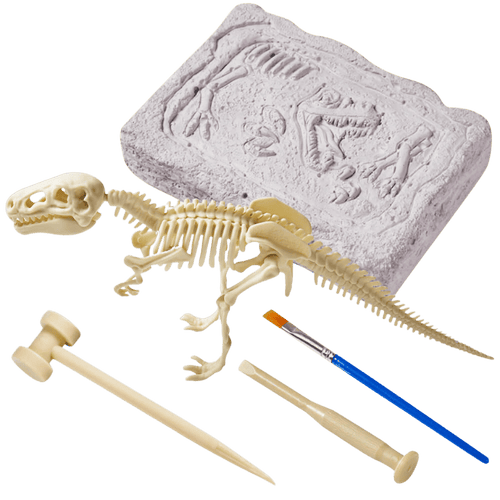


.jpg?v=1759152227051)
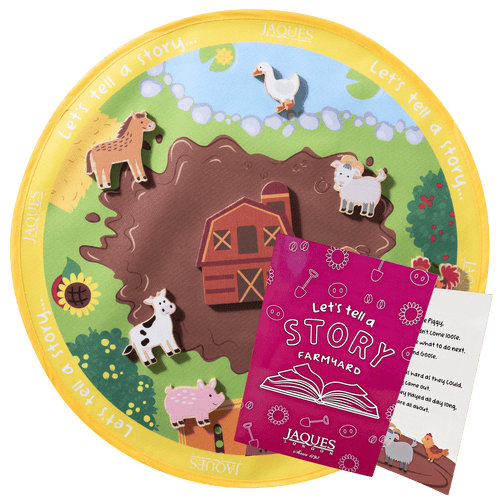

![Toy train set with wooden tracks, bridges, and miniature buildings on a black background [fill]](http://www.jaqueslondon.co.uk/cdn/shop/files/BridgeTrainSet-shopify-89936_ed75fd22-8412-446b-abc8-aa86069c5be8.png?v=1755172573&width=500)
.jpg?v=1737632357170)


.jpg?v=1757428035247)
![Wooden toy with a wheel and red base, featuring paper figures on a green background. [fill]](http://www.jaqueslondon.co.uk/cdn/shop/files/89837-FerrisWheel-Shopify.png?v=1757427340&width=500)


.jpg?v=1780670378897)
![Toy barn set with farm animals and educational cards on a green background [fill]](http://www.jaqueslondon.co.uk/cdn/shop/files/89880-Shopify_02bbcaf3-cc19-4404-ba39-4348b6b500be.png?v=1770828224&width=500)
-(1).jpg?v=1780669822071)
![Toy tractor with trailer, farm animals, and educational cards on a green background [fill]](http://www.jaqueslondon.co.uk/cdn/shop/files/96125-Tractor-ShopifyListing_1.png?v=1773837208&width=500)
Pretend play is essential for children’s development, encouraging creativity, communication, problem solving and emotional growth. Pretending helps little ones to learn on their own terms, creating their own world as they see it.
We have carefully selected some products to give them a helping hand as they navigate the world around them and bring some much needed creativity to us all.
Pretend Play: your questions answered
What age is pretend play most beneficial for?
Pretend play typically begins around age two and peaks between three and seven, though well-made open-ended toys remain engaging well beyond that. A good wooden kitchen or market set can hold a child's interest from toddlerhood through to early school years, making it genuinely good value compared with single-stage plastic alternatives.
Why choose wooden pretend play toys over plastic ones?
Wooden toys are heavier and more satisfying to handle, which matters to small children more than adults often realise. They do not crack, fade or warp the way thin plastic does, and they carry no concerns about BPA or phthalates. A solid wooden toy also tends to hold its appearance well enough to pass down to younger siblings or future generations.
Are pretend play toys safe for toddlers?
Safety depends on the specific toy rather than the category as a whole. Always check the manufacturer's minimum age guidance, look for CE or UKCA marking, and inspect for small detachable parts if the child is under three. Jaques of London pretend play pieces are designed and tested with age-appropriate safety standards in mind, and age guidance is listed on each product page.
How do I choose the right pretend play toy as a gift?
Think about what the child already gravitates toward. A child who loves cooking alongside a grown-up will respond to a kitchen or food set; one who enjoys organising things may love a till or market stall. Open-ended sets with multiple pieces tend to give more play variety than single-role toys, and they age better as the child's imagination develops.
How should I care for wooden pretend play toys?
Wipe wooden toys with a lightly damp cloth and dry them straight away. Avoid soaking, dishwashers or prolonged damp storage, all of which can cause wood to swell or paint to lift. If the surface dulls over time, a small amount of natural beeswax or food-safe wood oil rubbed in and buffed off can restore the appearance and protect the grain.
Do pretend play toys actually support child development?
Yes, and there is solid research behind it. Role play builds language, empathy and social skills as children rehearse real-world scenarios. It also encourages problem-solving and creativity without a screen or fixed outcome. Toys that do less, meaning they do not light up or make automated sounds, tend to draw more language out of children because the child has to supply the narrative.
What makes a pretend play toy genuinely heirloom quality?
Heirloom quality means the toy survives not just one childhood but several. Look for solid wood rather than MDF or composite board, non-toxic paint finishes that resist chipping, and metal fixings rather than glued-on plastic parts. A toy that can be lightly sanded and re-oiled if scratched, and that holds no batteries to corrode, is realistically something a grandchild could still use one day.
Jaques of London · Britain's oldest games and toy maker · Est. 1795