.jpg?v=1730475895062&options=)

.jpg?v=1758208711116)

.jpg?v=1789399747882)
![A set of colorful wooden animal puzzle boards shown on a white background, including a blue elephant, a yellow duck with a gold fish, and a green frog in a blue pond. Loose matching puzzle pieces are scattered around. [fill]](http://www.jaqueslondon.co.uk/cdn/shop/files/89442-Shopify.png?v=1789399633&width=500)


.jpg?v=1754664111281)


-(3).jpg?v=1754901659695)



![Wooden rainbow shape puzzles [fill]](http://www.jaqueslondon.co.uk/cdn/shop/files/89440-ShopifyImageDeck-RainbowPuzzles_1.png?v=1764599521&width=500)


.jpg?v=1779462118779)



.png?v=1729003942030)




![Colourful wooden toy with bead maze and abacus [fill]](http://www.jaqueslondon.co.uk/cdn/shop/files/ActivityMaze-shopify-90241.png?v=1759919199&width=500)


![Colourful plastic toys including bowls, tongs, and sea creature figures on a clear background [fill]](http://www.jaqueslondon.co.uk/cdn/shop/files/89155-coloursorting-shopify_1.png?v=1765380153&width=500)
.jpg?v=1726483418101)

.jpg?v=1737632357170)


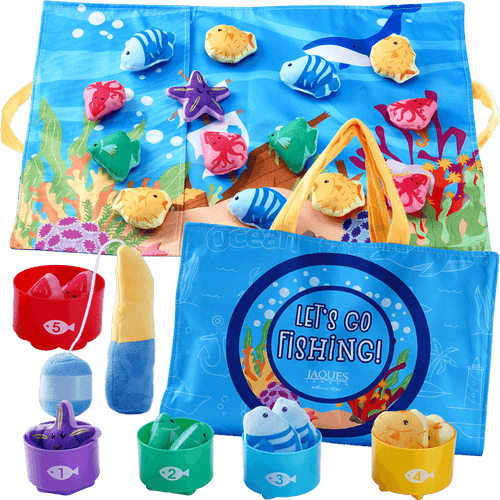
Sensory toys provide a fun and safe experience for all babies and kids.
It is proven that these wooden toys are especially stimulating for those with autism and other learning difficulties.
Autism toys are perfect for a sensory experience during playtime and also help your child's development while providing lots of fun!
Sensory Toys: your questions answered
What age are sensory toys suitable for?
Most sensory toys suit children from birth through to around seven or eight years, though the right choice depends on the specific toy. Simpler tactile pieces with no small parts work well from newborn. More complex sensory boards or threading toys are better from around eighteen months, when little fingers have the dexterity to explore them properly.
Why choose wooden sensory toys over plastic ones?
Wood has natural weight, warmth and texture that plastic simply cannot replicate, and those qualities are exactly what good sensory play is about. Wooden toys also tend to be far more durable, so they survive the enthusiasm of toddlers and younger siblings alike. A well-made wooden sensory toy from a reputable maker will often last a decade or more.
Are Jaques sensory toys safe for babies and toddlers?
Yes. Jaques of London uses non-toxic, child-safe finishes and solid hardwoods across our sensory range. Every toy is designed with young children in mind, so edges are smooth and finishes are thoroughly tested. Always check the individual age guidance on each product, as some pieces contain smaller components not suitable for children under three.
How do I choose the right sensory toy for a child's needs?
Think about what senses you want to stimulate. Tactile boards and textured rings build touch awareness. Rattles and musical toys develop hearing. Bright, high-contrast pieces support early vision. For children with sensory processing differences, calmer, repetitive-motion toys like spinning discs or smooth wooden stackers often work best. When in doubt, simpler is usually better.
How do I clean and care for wooden sensory toys?
Wipe wooden sensory toys down with a lightly damp cloth and mild soap, then dry them straight away. Never soak or put them in a dishwasher, as prolonged moisture causes wood to warp and crack. If the surface looks dry over time, a small amount of food-grade beeswax or linseed oil rubbed in gently will restore the finish and keep the wood in good condition.
Are sensory toys a good gift for babies and young children?
They are one of the most practical gifts you can give. Unlike many novelty toys, a good sensory toy gets used every day because children are naturally drawn to objects that respond to touch, sound or movement. A quality wooden piece also looks appealing in any home, which parents genuinely appreciate, and it holds up well enough to be passed on or kept for younger siblings.
What makes a sensory toy last, and is it worth spending more?
Construction quality is everything. Toys joined with wooden dowels or mortise joints outlast those held together with glue alone. Non-toxic lacquers and oil finishes protect wood far longer than painted surfaces on cheaper toys. Spending a little more on a well-made piece from an established maker means you buy once rather than replacing the same toy repeatedly as it breaks or chips.
Jaques of London · Britain's oldest games and toy maker · Est. 1795