

![A wooden cribbage game set with green felt playing surfaces, playing pieces, and a fan of playing cards on a plain white background. [fill]](http://www.jaqueslondon.co.uk/cdn/shop/files/56501FoldingCribbageBoardwithcard.png?v=1789054330&width=500)

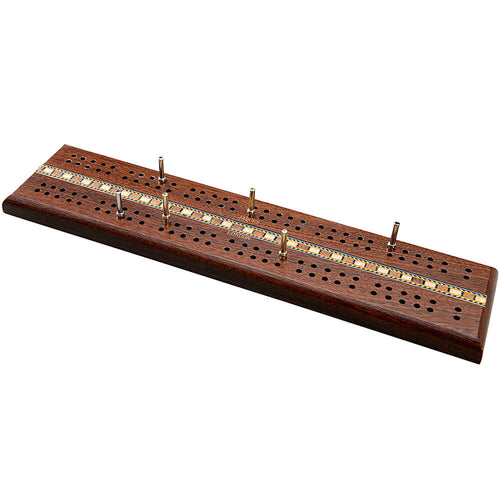



Created in the early 17th century, Cribbage remains one of the earliest popularised card games to still be played regularly today. Recognised as Britain’s card game of choice, Cribbage holds great significance in the history of the country’s gaming past.
Exquisitely presented in bow-tied Jaques luxury, our cribbage sets are lovingly crafted to speak to the true connoisseurs of card play. From magnificent mahoganies to naturally harmonious hardwoods and opulent oaks, Jaques only use the finest materials for creating a truly special way of indulging in this classic staple of British gaming.
Our cribbage sets are complimented by the finest felts, ensuring total maintenance of beautifully illustrated playing cards and vibrantly moulded peg pieces. Whether playing as a pair or bringing this pub game to life with greater revelry, Jaques of London are proud to present our guests with the finest way to enjoy this British classic, whatever the occasion.
Cribbage: your questions answered
What age is cribbage suitable for?
Cribbage is best suited to players aged 10 and upward. The game involves counting card combinations and basic strategy, so younger children tend to find it frustrating rather than fun. From around 10 to 12, with a patient adult to guide the first few games, most children pick it up confidently within an hour or two.
Why choose a wooden cribbage board over a plastic one?
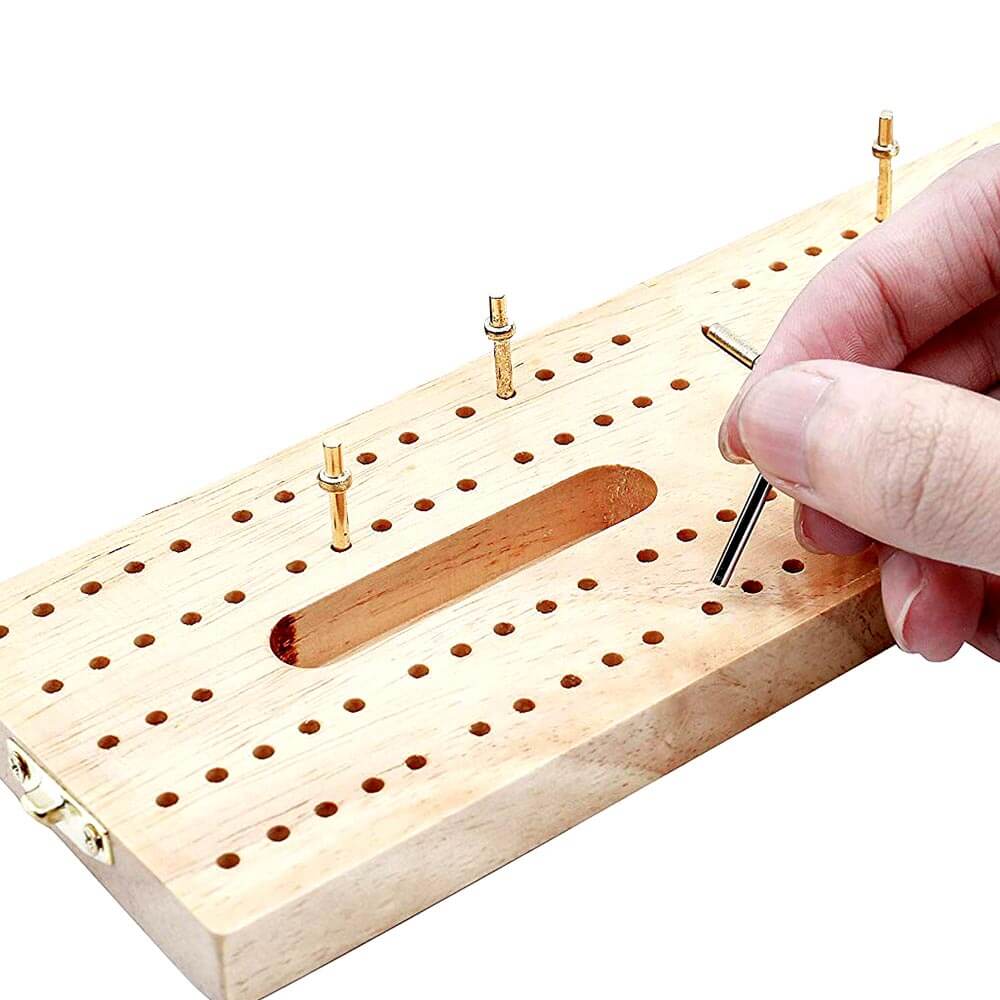
Wooden boards are stable on the table, satisfying to touch, and they do not crack or warp with normal use the way thin plastic does. The pegs sit firmly in drilled holes rather than loose moulded channels. A well-made wooden board also looks at home on a shelf between games, which means it actually gets brought out and played rather than pushed to the back of a cupboard.
What should I look for when choosing a cribbage board as a gift?
Check that pegs are included and that there is somewhere to store them when not in use, because loose pegs are the first thing to go missing. A board with a lid or internal compartment keeps everything together. For a gift, solid wood with a clean finish looks considered and lasting. If the recipient plays regularly, a four-track board suits two or four players and gives more flexibility.
How do I care for a wooden cribbage board?
Keep it away from direct heat sources such as radiators and sunny windowsills, which can cause wood to split over time. Wipe it down with a dry or very slightly damp cloth. Occasional light application of beeswax or furniture wax will keep the wood from drying out. Store pegs in their compartment so they are not rattling loose in a drawer somewhere and getting lost.
What is the difference between a two-track and a four-track cribbage board?
A two-track board is designed for two players, each using one track to race their pegs around to 121 points. A four-track board accommodates up to four players, making it better for family play or flexible enough to be used as two separate two-player tracks when only two people are playing. If you are buying for a family, a four-track board is the more versatile choice.
Can cribbage boards be personalised or given as a lasting heirloom gift?
Solid wood boards take engraving well, and many people commission personalised cribbage boards for significant birthdays, retirements, or anniversaries. A wooden board bought with some care genuinely lasts for generations. Jaques of London has been making games since 1795, and boards from earlier decades still turn up in good working order, which gives some sense of what a quality wooden set can actually survive.
Do I need to know how to play cribbage before buying a board?
Not at all. Cribbage has been played in Britain for over four hundred years and the rules are well documented. Most Jaques boards come with a rules summary, and the full rules are widely available in print and online. Many buyers purchase a board precisely because they want to learn the game, and the physicality of moving pegs and holding cards makes the learning process much easier than following a digital version.
Jaques of London · Britain's oldest games and toy maker · Est. 1795